
A calligraphy font is not a replacement for a practiced hand. It is a different tool: a designed alphabet that can bring the rhythm of brush lettering to invitations, labels, title cards, and small personal projects. The useful question is not simply which script looks prettiest, but which one remains readable, includes the characters you need, and is licensed for the way you intend to use it.
Free editions are often demos. They may include only standard characters and permit personal use while reserving commercial work, web embedding, apps, editable templates, or products for a paid license. Availability and terms can change, so always read the current license file on the download page before publishing.
Photo by Niketh Vellanki on Unsplash.
Alternates, Ligatures, and File Formats
An alternate is another drawing of the same character: perhaps a capital with a long entry stroke or a final letter with an extended tail. A ligature replaces two or more letters with a specially drawn combination so their joins look natural. Full commercial editions often contain more of both than free demos.
OTF files usually support advanced OpenType features when the font includes them. TTF is widely compatible, but a TTF demo may contain only the basic glyph set. WOFF is a web-font format; having the file does not itself grant permission to embed it on a website.
Sixteen Fonts to Consider
1. Cerilleta
A decorative script with a generous lowercase o and showy capital swashes. It suits names, short headings, and small celebratory pieces better than long paragraphs.
2. Bitthai Script
Loose, quick, and signature-like. Its informal rhythm works for personal marks, social graphics, and projects that should feel spontaneous.
3. Charlotte Calligraphy
A sweet, slanted script with heart-shaped details in some letters. It belongs naturally to cards, party stationery, and playful personal projects.
4. Princella
Large capital flourishes give Princella a festive character. Use it where a first letter or proper name can become the center of the composition.
5. Brooke Smith Script
A relaxed monoline hand with little contrast between thick and thin strokes. It pairs well with a quiet sans serif and remains readable at modest sizes.
6. Challista
A polished modern script with a balanced baseline. It is useful for invitations, names, and feminine editorial accents without becoming excessively ornate.
7. Eritta
A bouncing baseline and rounded flourishes make Eritta lively. Keep the surrounding typography simple so the movement has room to breathe.
8. Andora
A heavier brush-style face with a hint of sign painting. It carries more visual weight than the finer scripts and works well for bold labels or vintage-inspired headings.
9. Desyanti
Strong downstrokes and expressive descenders give this font presence even at smaller display sizes. It works well for a single phrase rather than a dense text block.
10. Chandrawinata
Nearly monoline and comparatively restrained, Chandrawinata is useful when a project needs handwriting without elaborate flourishes. Check the specific license before any web-font use.
11. Melinda
Soft capitals and a modern handwritten rhythm make Melinda suitable for names, quotes, and calm lifestyle graphics.
12. Signatra
Thin upstrokes and broad brush downstrokes create the feeling of a confident marker hand. It is effective for logos, labels, and short headlines.
13. Marchelina Script
A casual connected script with a friendly everyday character. The free edition is simple; the fuller edition adds more OpenType choices.
14. Bernadette
Broad, brush-like forms give Bernadette a strong handmade presence. It is best used large enough for the counters and joins to remain open.
15. Trade Mark
A lively script with a commercial-sign flavor. It can give packaging mockups and title cards a sense of movement, especially when paired with small uppercase text.
16. Brillyo
A romantic slanted script with playful dots and details. It works for personal stationery and celebratory graphics where sweetness is part of the brief.
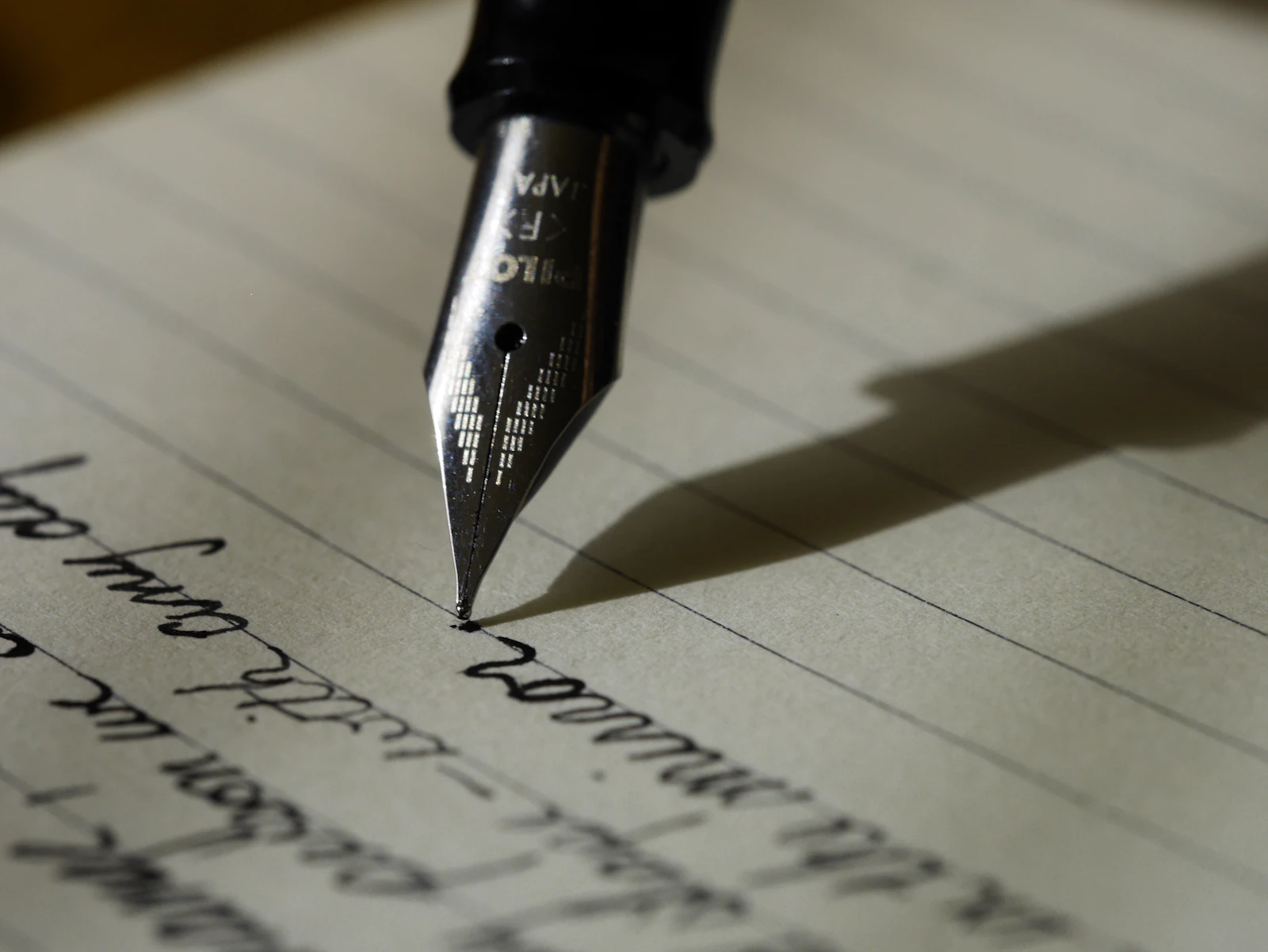
Photo by Aaron Burden on Unsplash.
How to Choose One
Begin with the words the project must display. Test every capital, number, accented letter, and punctuation mark you need. A beautiful specimen image may hide the weak letters in your actual name or phrase.
Then test scale. Fine hairlines can disappear on a small label, while a heavy brush script can close up when printed too small. Print a proof at final size rather than judging only on a large screen.
Pair script with restraint. A neutral serif or sans serif can carry dates, addresses, ingredients, and body copy while the calligraphy font handles one name or phrase. Two elaborate scripts usually compete rather than cooperate.

Photo by Rachel McDermott on Unsplash.
A Simple License Checklist
Before using a free font, confirm:
- whether the license covers personal or commercial work;
- whether physical products, logos, client work, and social graphics are included;
- whether web, PDF, app, or editable-template embedding is allowed;
- whether attribution is required;
- whether the license applies to the free demo or only the purchased family.
The best free calligraphy font is not necessarily the one with the longest flourishes. It is the one whose character set, rhythm, technical files, and license all fit the project. Choose it as carefully as you would choose a nib or brush: for the mark it makes and for the work it is actually allowed to do.