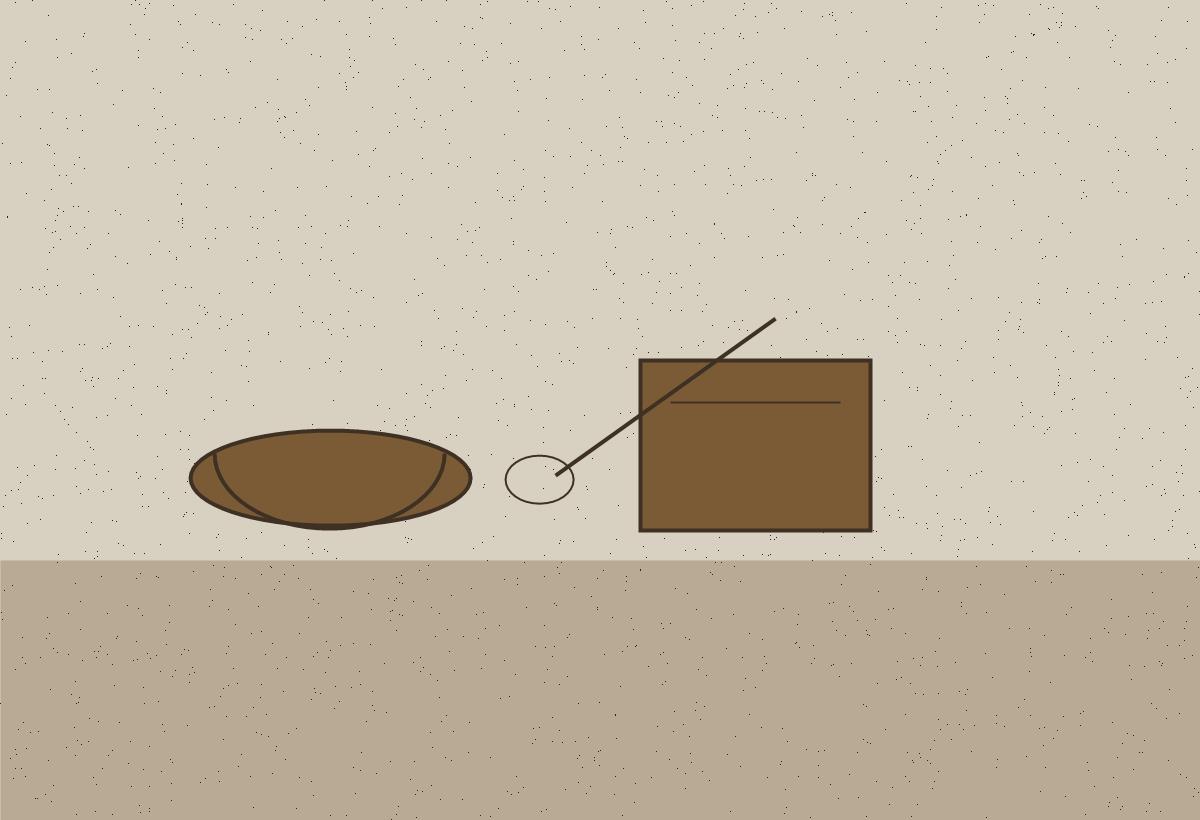
Wooden objects rarely ask to be admired first. A spoon, a low stool, a lidded box, a small peg rail by the door: each becomes visible through use. The hand learns the rounded edge before the eye bothers to name it.
In older rooms, wood often works as a quiet register of time. It darkens where fingers return. It takes dents without losing dignity. It can be repaired with a wedge, a sliver, a clamp, or a little patience.
The Value of Plain Things
The useful wooden object is often better when it is almost anonymous. A tray that carries cups, a box that keeps matches dry, a stool that moves from hearth to workbench can gather more feeling than a larger piece made only for display.
This is not an argument against beauty. It is an argument for beauty that arrives through service. A burnished handle, a softened corner, or the dry sound of a drawer closing can be enough.
Beginning With Wood at Home
For beginners, the best first study is not a complicated chair. It is a simple thing that can be held: a shelf peg, a butter paddle, a small caddy, a repair to a loose box. These teach grain direction, pressure, and restraint.
Good woodcraft begins by noticing what the material will permit. Plane with the grain. Sand less than you think. Oil lightly. Leave a trace of the hand.
The room changes when wood is allowed to remain wood. It does not need to imitate stone, metal, or paint. It only needs to be kept close enough to be used.